


Number 6
NEOLITHIC AND ENEOLITHIC ARCHAEOLOGICAL MATERIAL FROM FIELD SURVEY IN SOFIA MUNICIPALITY DURING 2022 AND 2023
RESUME
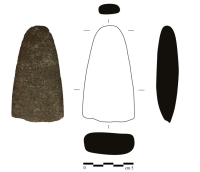
During regular field surveys in Pancharevo region, Sofia district different prehistoric archeological material was discovered. Few distinctive pottery sherds were found and are presented in this text. Due to the condition of the material it was not possible to distinguish with great certainty different forms and types of vessels. The fragmentary state of the material was also the reason finding parallels and analogies in other sites was difficult. Most examples have similarities with forms dated to the Neolithic and Eneolithic periods.
Tsvetina Getovska, PhD student
Sofia University “St. Kliment Ohridski”
tsgetovska@gmail.com
ANCIENT LAMPS IN THE COLLECTION OF THE NATIONAL POLYTECHNICAL MUSEUM
RESUME
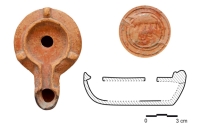
The article showcases the collection of ancient lamps in the collection of the National Polytechnical Museum, located in Sofia, Bulgaria. The collection consists of 23 objects (21 lamps, a mould and one other miscellaneous item), acquired as donations, most of which unfortunately lack any information about the location they were found. This limits the possibilities for analysis apart from placing them in typological groups and drawing of parallels, in view of this, the present work has the character of a catalogue.
Angelos Gougoudis
Regional History Museum – Sofia
angelosgougoudis@gmail.com
THE LATE ANTIQUE COMPLEX IN OBELIA (SOFIA) - A NEW LOOK AT THE RESEARCHES FROM THE 1960S
RESUME
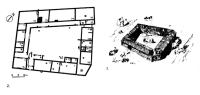
The villa rustica in Obelya (Sofia) is one of the eight similar sites in the immediate vicinity of the provincial capital of Dacia Mediterranea in the Late Antiquity – Serdica. The complex is located 7 km west of the fortified area of the city. It has been excavated during three archaeological campaigns: in 1961, 1962, and 1964. In the archaeological literature the complex is counted among the fully explored ones in the vicinity of Serdica. Through the years, the interpretations of the chronology and the economic development of the site became а benchmark of all the villae rusticae in the proximity of present-day Sofia. In 1981 the results of the excavations have been published in a relatively short article.
Anani Antonov, PhD
National Archaeological Institute with Museum Bulgarian Academy of Sciences
anani_antonov@abv.bg
ARCHAEOMETALLURGICAL RESEARCH OF BRONZE AGE FINDS FROM THE ARCHAEOLOGICAL SITE NEAR CHUKOVEZER
RESUME
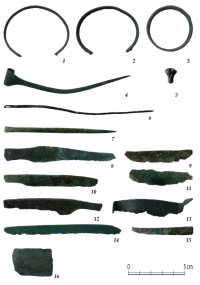
The archaeometallurgical research covers copper alloy artefacts found in the Bronze Age settlement and necropolis near the village of Chukovezer. The archaeological material under investigation belongs to the following categories – bracelets, pins, needles, awls, knives and swords. The compositional analysis of 13 chemical elements (Cu, Sn, As, Pb, Fe, Ni, Ag, Sb, Zn, Au, Mn, Co, Cr) has been performed using X-Ray Fluorescence. The results evidence that most of the metal artefacts are made of tin bronze, except of a pin cast of arsenical copper. Five knives and two bracelets are made of the ternary alloy Cu-Sn-As. Another ternary alloy – Cu-Sn-Pb is prepared for the production of a knife from the necropolis. The comparative study of the correlations between the main elements in the finds from the Bronze Age village and those from the necropolis reveals that there is no definite separation between the two groups. Further examination of the concentrations of the main elements in the different categories of artefacts shows variations primarily in the quantitative values of tin.
Silviya Ivanova, PhD
Regional History Museum – Sofia
silvivanova@abv.bg
Deyan Lesigyarski, PhD
National Institute of Geophysic, Geodesy and Geography Bulgarian Academy of Sciences
dlesigyarski@geophys.bas.bg
FIELD SURVEYS IN SOFIA MUNICIPALITY IN 2022 AND 2023
RESUME
2022
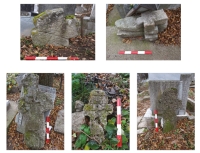
Between October 13th and December 8th 2021, the third field expedition under the project of the Regional History Museum – Sofia for updating and renewal of the Automated Information System – “Archaeological Map of Bulgaria” in the Sofia City Province were conducted. The working area is in the lands of the villages of Lozen, German, Kazichene and Krivina
2023
Between October 12th and November 24th 2021, the forth field expedition under the project of the Regional History Museum – Sofia for updating and renewal of the Automated Information System – “Archaeological Map of Bulgaria” in the Sofia City Province were conducted. The working area is in the lands of the Mladost, Studentski, Lozenets, Triaditsa, Vitosha, Ovcha kupel, Bankya and Lyulin districts.
Alexander Stanev, PhD
Regional History Museum – Sofia
alexander.stanev@sofiahistorymuseum.com
Metodi Zlatkov, PhD
National Archaeological Institute with Museum Bulgarian Academy of Sciences
metodi_man@abv.bg
TOURIST ORGANIZATIONS IN SOFIA PART 1: FROM THE BEGINNING OF ORGANIZED TOURISM IN BULGARIA TO THE 1950S
RESUME
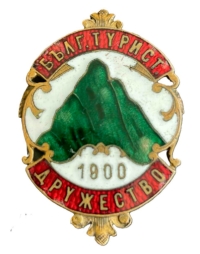
Since the earliest days of organized Bulgarian tourism, Sofia society has always taken on a leading role. The reasons for this social phenomenon are the immediate proximity and easy accessibility of the VitoshaMountain and the desire of Sofia intellectuals to keep up with modern pan-European tourism trends in the early 20th century. The tourist movement was initially seen as an elitist trend, typical of the urban culture, but gradually gained greater popularity among the wider Bulgarian society, thanks to the many newly founded organizations, uniting different social groups, according to their professional or personal interests.
Mario Filipov, PhD
Regional History Museum – Sofia
mfilipov88@gmal.com
INTERMITTENT CONFINEMENT OR EXILE BONCHO M. BONCHEV AND HIS BOOK
RESUME
The article examines one important part of the judicial system in the Tsardom of Bulgaria during the 40`s. This is done by analyzing a book by Boncho M. Bonchev – famous lawprofessor at that time in Bulgaria. Bonchev wrote many law studies – articles, books and textbooks. He also had high administrative rolein the Bulgarian rule in Macedonia,Morava Valley and Western Thrace during WW2. Bonchev is the son of MateiBonchev Stanchev – a famous Bulgarian journalist who was sentenced to 10 years’ imprisonment by People's Court in Bulgaria for writing articles against the Soviet Union and defending Nazi Germany in famous newspapers at that time.
SilvioTomov
Regional History Museum – Sofia
tomov_1996@abv.bg
SOFIA AND THE SOFIA WAY OF LIFE IN THE WORK OF THE WRITER KRASSIMIR DAMYANOV
RESUME
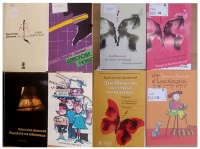
The article is an attempt to present the personality of the Bulgarian writer Krassimir Damyanov (1948 – 2015). His personal and creative growth is traced. The primary source is his prose literary work, his interviews for Bulgarian media and the personal impressions of the author of the article from his personality and from the time described (1969 – 1990). This is an attempt at a generational history of those born immediately after the end of World War II and an urban anthropology. Young people who listened to the Beatles and other Western rock bands of that time and behaved in a freedom-loving manner were called by conservative circles in the People's Republic of Bulgaria "Betles". Damyanov's environment is intellectual, Bohemian and creative. The writer describes his friendship with the Bulgarian artists Alexander Kandov, Vladi Kirov, Lyubomir Kanov and Viktor Paskov. As students and young professionals, they are representatives of the hippie subculture and the intellectual elite at the same time. In the capital city, these subcultural phenomena are extremely bright and dynamic. The natives of Sofia have their own cultural code. The citizens of Sofia have their own standard of living, the trademark of which is the way they go on vacation.
Ilia Mechkov, PhD
Regional History Museum – Sofia
amechkov@abv.bg
A BRIEF HISTORY OF THE GIRLS' PRACTICAL VOCATIONAL SCHOOL "PRINCESS EVDOKIA" – PAVLOVO – SOFIA
RESUME
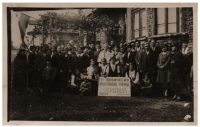
The history of the Professional School "Princess Evdokia" was written by its director Mara Mihailova. She manages the school, but she is also a teacher in it. The manuscript traces the main moments of the school's activity in its short period of existence.
The manuscript is submitted without substantial editing.
Mariana Marinova
Regional History Museum – Sofia
mariyana.marinova@sofiahistorymuseum.bg
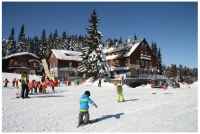
VITOSHA NATURE PARK – 90 YEARS
RESUME
Vitosha has been known since ancient times. It had different names over the centuries – Skomos, Skombros, Skopios. At the end of the 11th century, the name Vitosha was first mentioned in the written source "Bulgarian Apocryphal Chronicle". According to Professor Dimitar Dechev (1877-1958), the name Vitosha is Thracian and consists of two words – "vi" (a couple of, two), and "tosh" (to cut, to divide). So Vitosha means "two slices", which is reminiscent of the two Vitosha peaks, Golyam and Malak Rezen, clearly standing out on the mountain's relief.
Yulia Michailova
Directorate of Natural Park Vitosha
julia_mihaylova@abv.bg
Editions

Contents of number 1

Contents of number 5
-

